How Businesses Should Rethink Video Strategy for 2026?
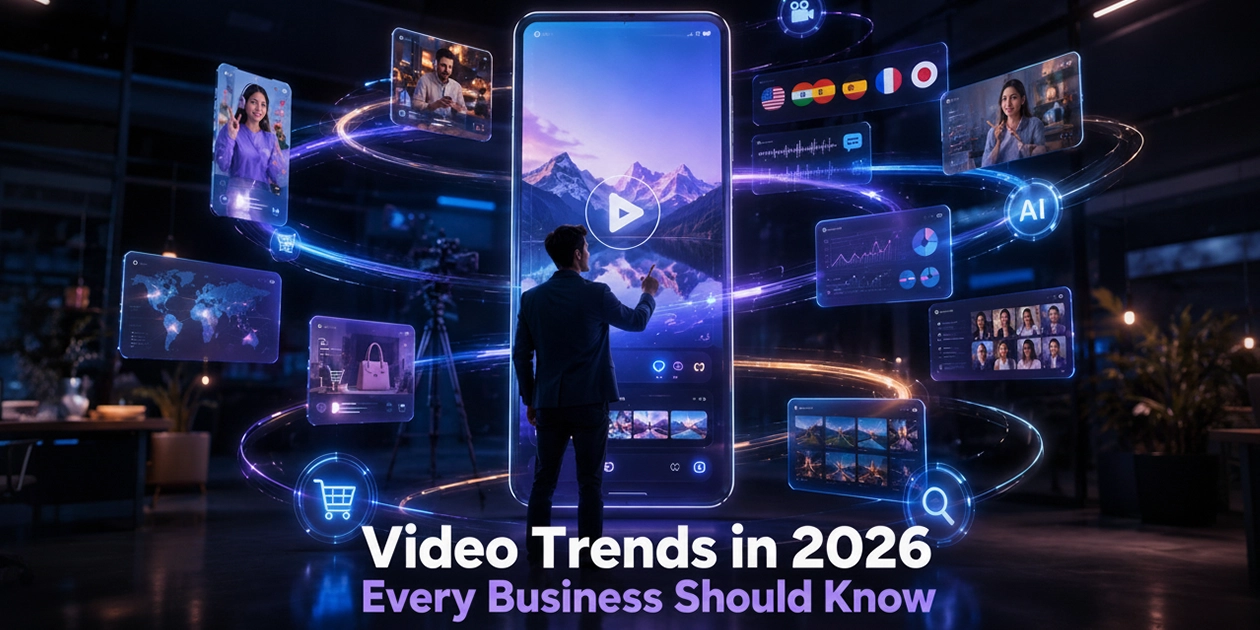
Indian businesses spent years debating whether video was worth the investment. That debate is done. Commercial video production services have become essential for brands looking to connect with modern audiences.
82% of internet traffic is video now. In India, where Jio changed everything about data consumption, that number runs even higher. 90% of consumers say video shapes what they buy. The question isn't whether to do video anymore. It's whether you're doing it right for 2026.
A lot has shifted this year. Here's what actually matters.
1. Short-Form Isn't Going Anywhere
The numbers speak clearly:
- 71% of marketers say videos under 2 minutes perform best
- 63% of consumers turn to short video first when researching a purchase
- Reels, Shorts, Moj, Josh — all growing, none slowing
Tier 2 and Tier 3 India runs on mobile. People aren't sitting down for a 10-minute brand video. They're scrolling between tasks, during commutes, waiting somewhere.
Brands still convince themselves short-form is for lifestyle brands or young audiences. Manufacturing companies think this. B2B software companies think this. But their buyers scroll too. Everyone does.
Making a short video isn't the hard part. Making one that stops someone mid-scroll — that's the real job.
2. The Two-Speed Video Strategy
Smart brands in 2026 aren't picking between short and long. They run both tracks on purpose.
Short-Form - The Reach Engine
Vertical clips. 15 to 60 seconds. Built for Reels, Shorts, Stories. Not for selling. For showing up, building familiarity, giving a quick reason to care. Top of funnel, done consistently.
Long-Form - The Trust Builder
Webinars. YouTube deep-dives. Case study walkthroughs. Detailed product demos. 8 to 20 minutes of content that converts someone who's already interested into someone who actually buys.
The short stuff feeds the long stuff. Someone catches your Reel, gets curious, watches your YouTube explainer before calling. That path happens constantly. Most brands never track it.
The smart workflow:
- Record one anchor video.
- Use AI tools to pull 5 to 10 short clips from it.
- One recording session.
- Multiple platforms covered.
- No team burnout.
3. The "Real-Face" Era of Authenticity
Something has flipped. Polished, scripted corporate ads are losing ground. Founder videos filmed on a phone, employees talking candidly, unedited behind-the-scenes moments — these pull more engagement than expensive campaigns right now.
The reason is AI fatigue. Audiences have seen too much perfect-looking content. They've learned to tune it out fast.
What lands now is a real face. Someone who sounds like they're actually talking to you. Not performing for a camera.
What this looks like practically:
- Feature actual employees, not actors. A customer support person explaining a product beats a voiceover any day
- Behind-the-scenes footage builds trust faster than a highlight reel
- Use AI for the boring work — captions, localization, rough cuts, script research. Keep the storytelling and tone completely human
The "uncanny valley" is real in video now. Audiences feel when something is too perfect. That feeling costs you the watch.
4. Vertical-First & Silent Viewing
Most mobile video is consumed without sound. On a train. In an office. Somewhere public. If your video only makes sense with audio, a large chunk of your audience never gets your message.
This isn't optional design anymore. It's the baseline.
Design for silence from the start:
- Burned-in captions, not just auto-generated ones that look like an afterthought
- Text overlays that carry the story on their own
- Visual storytelling that works with sound off
The first 3 seconds matter more than anything else:
- Lead with bold text or movement
- Communicate your value visually before you say a word
- If someone has to wait for a logo animation, they're already gone.
Mobile accounts for 75% of all video consumption. That stat alone should change how every video gets made.
5. AI-Powered Production Without Losing the Human
Here's what the shift looks like in real numbers
| Task | Before AI | Now |
|---|---|---|
| Subtitles | Separate team, extra budget | Auto-generated instantly |
| Platform resizing | Manual edit per platform | One-click resize |
| Transcriptions | Hours of manual work | Done in minutes |
| Script drafts | Blank page every time | AI starting point, human finish |
| Language localization | Expensive process | Automated for multiple languages |
75% of marketing videos in 2026 involve AI somewhere in production. For businesses in Coimbatore, Surat, or Nagpur, this is a genuine opening. Production costs that made video unreachable are falling fast.
The mistake most make: treating AI output as final content. It isn't. AI handles the mechanical load. Judgment, tone, story direction, that stays human. Always.
6. Interactive & Shoppable Video
Passive watching is fading. People expect to do something while they watch.
Platforms now let viewers click product tags inside a video, follow a CTA without leaving the content, and complete a purchase without switching apps. Shoppable video drives conversions up to 3.4x compared to standard video.
Think about what this means in Indian e-commerce. Someone watching a saree draping tutorial taps the product being worn. Straight to checkout. Discovery to purchase inside one video, no friction.
Beyond shopping, interactivity also includes:
- In-video polls that collect real audience preference data
- Clickable hotspots for product exploration
- Decision-tree tutorials that adapt to viewer choices
These tools don't just improve engagement. They tell you exactly what your audience actually cares about — which is data most brands never collect from standard video.
7. Personalized Video at Scale
One product video sent to your entire email list is a blunt instrument. 2026 has moved past that.
Personalized AI video has grown 620% since early 2025. Brands now send different versions of the same video automatically, adjusted by viewer location, language, purchase history, browsing behavior. Nearly 90% of marketers using personalization report positive ROI.
India isn't one market. A brand with customers in Tamil Nadu, Punjab, and Odisha is dealing with different languages, different cultural contexts, different buying triggers entirely. Video that acknowledges that it performs better. Every single time.
8. Search & Discovery - Video SEO Has Changed
YouTube has over 450 million users in India. People use it to research purchases, compare products, and learn before they buy. It's a search engine, not just a video platform.
What's new in 2026 is how AI-powered search tools, like Google's AI overviews and other generative engines, now pull video content directly into answers. A well-optimized video can appear in places your text content never reached.
What optimization actually means now:
- Titles written for how people actually search, not how brands talk about themselves
- Put the answer or point in the first 2 to 3 seconds of the video. Nobody waits for an intro anymore
- Descriptions with real context, not keyword stuffing
- Chapters and timestamps so search engines understand the structure
- Transcripts that give AI tools something to read and index
One good video, optimized properly, can drive organic traffic for months with zero ad spend behind it. Most brands post and forget. The ones building for discovery keep getting found long after they've moved on.
9. Community-Driven & Authority Content
Chasing viral moments is expensive and unreliable. Brands that are actually winning with video in 2026 aren't trying to go viral. They're building something repeatable.
What this looks like:
- A weekly signature series answering real customer questions
- Educational content that addresses the exact problems your audience searches for
- User-generated video features that make customers part of the story
- Authority-driven content that positions your brand as the most useful voice in your category
The goal is a loyal audience that shows up for your next video because the last one was worth their time. That compounds. Viral moments don't. Consistency does.
Implementation Checklist
| Action Item | Frequency | Goal |
|---|---|---|
| Short-Form Clips | 3 to 5 per week | Discovery and Brand Awareness |
| Anchor Content | 1 to 2 per month | Authority and Customer Trust |
| Captioning | Every video | Accessibility and Silent Viewing |
| Employee Voices | Consistent rotation | Humanization of the Brand |
Turn 2026 Video Trends Into Results With BVR Promos
Don't wait for the "perfect" studio setup to start producing content. In 2026, a clear, authentic point of view shared via a smartphone will consistently outperform a high-budget, soulless production. Focus on solving real problems for your customers, showing the faces behind the brand, and meeting your audience where they are, on their mobile devices, looking for answers, not ads.
Start where your business already has momentum.
Is social media your strength? Build a short-form system and stay consistent for 60 days.
Running an online store? Pick one product and test shoppable video on it first.
Need credibility in your sector? Put a founder or an employee on camera once a week for a month and see what happens.
93% of businesses using video report strong ROI. Not because they overhauled everything. They picked one thing, figured out what worked, and kept going.
BVR Promos, as the best video production agency, helps Indian businesses get there. Right format, right execution, no guesswork. Content that actually does something, not just content that exists. 2026 won't slow down. Talk to BVR Promos and get started.